Stroke Rehabilitation at Home: What Families Should Know
When a loved one has a stroke, life suddenly feels divided into before and after. The hospital stay is often intense, emotional, and overwhelming but for many families, the real questions begin once the patient comes home.
What happens next? Will they walk again? Speak clearly again? Be independent again? Stroke recovery doesn’t stop at discharge. In many cases, home rehabilitation becomes the most important part of healing and understanding what to expect can make the journey feel less frightening and more manageable.
Why the Recovery Journey Looks Different for Every Stroke Survivor
No two strokes are the same. Some people experience mild weakness, while others may struggle with speech, movement, or memory. Progress can be steady one week and slow the next which is totally normal.
What matters most is starting rehabilitation early and continuing it consistently, even when progress feels small. Those small improvements add up over time.
For many patients, continuing recovery at home provides the comfort, familiarity, and emotional support they need to stay motivated.
Why Home Rehabilitation Often Makes Sense
A Familiar Environment Reduces Stress
Hospitals can feel intimidating. At home, patients are surrounded by familiar faces, routines, and surroundings which often helps them feel calmer and more willing to participate in therapy.
Care Is Built Around Real Life
Rehabilitation at home focuses on real daily challenges: getting out of bed, using the bathroom safely, moving around the house, or eating independently.
Families Learn Along the Way
When care happens at home, families can observe, ask questions, and learn how to safely support their loved one between professional visits.
What Stroke Rehabilitation at Home Usually Involves
Recovery is most successful when different types of care work together.
Home Nursing Care
- Monitoring vital signs and overall health
- Administering medications correctly and on time
- Preventing complications such as infections or pressure sores
- Assisting with hygiene, feeding, and mobility
For families, this brings peace of mind, knowing someone experienced is watching for warning signs they might miss.
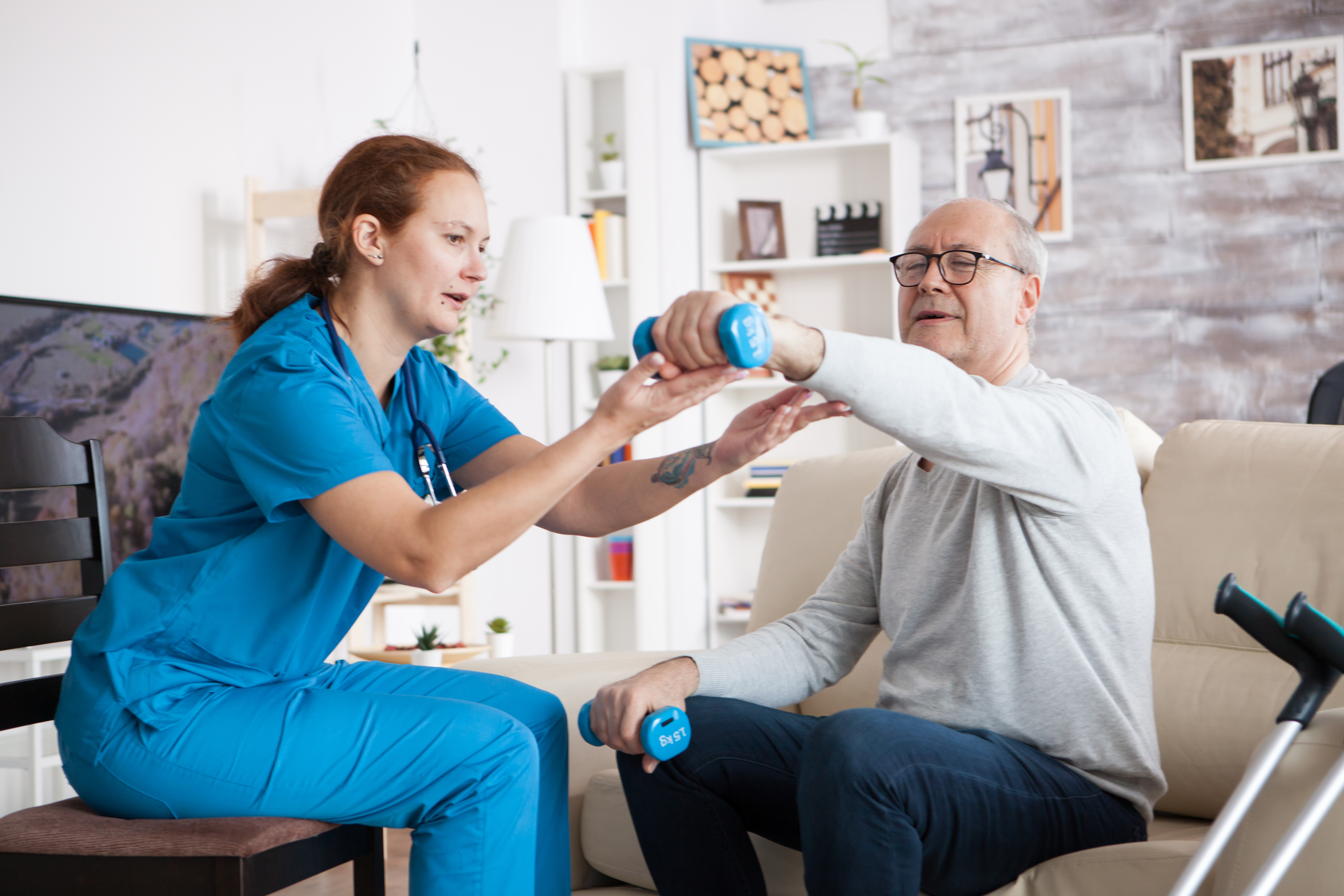
Physiotherapy
- Regain strength and balance
- Improve walking and movement
- Reduce stiffness and muscle tightness
- Relearn basic movements safely
Even simple exercises, done regularly, can make a meaningful difference over time.
Occupational Therapy
- Dressing and grooming
- Eating independently
- Using hands and arms effectively
- Adjusting the home to make it safer
Speech and Swallowing Support (When Needed)
Some stroke survivors struggle to speak clearly or swallow safely. Early professional support helps reduce frustration and prevent complications.
What Families Often Don’t Expect (But Should Know)
Recovery Takes Time
Progress isn’t always fast or visible. Some days feel hopeful; others feel discouraging. These emotional ups and downs are part of the process for both patients and caregivers.
Emotional Changes Are Common
Mood swings, frustration, anxiety, or even depression can happen after a stroke. These changes are not a personal failure, but they are part of the brain healing.
Safety Is Just as Important as Progress
Falls, choking risks, and infections are common concerns after stroke. Proper guidance from healthcare professionals helps keep recovery safe.
Choosing the Right Support at Home
- Experienced, licensed nurses and therapists
- Clear, individualized care plans
- Open communication with families
- A compassionate, patient-first approach
Some families in Dubai turn to structured providers like TrueLife Home Healthcare, who focus on supporting post-stroke patients through coordinated home nursing and rehabilitation, helping families feel supported rather than overwhelmed.
How Families Can Support Recovery Day to Day
- Encourage exercises recommended by therapists
- Keep routines calm and predictable
- Celebrate small wins like standing longer, clearer speech, better balance
- Be patient, even on difficult days
Recovery is not just physical but it’s also emotional, and your encouragement truly matters.
A Final Word for Families
Stroke recovery can feel uncertain, exhausting, and emotional but it doesn’t have to be navigated alone. With the right guidance, professional support, and reliable information, home rehabilitation can become a space for healing, progress, and renewed confidence.
If you’re supporting a loved one after a stroke, staying informed is one of the most powerful ways to help. Our blog is here to guide families through real questions, real challenges, and real recovery, one step at a time.
Surumi Sakeer
Physiotherapist